
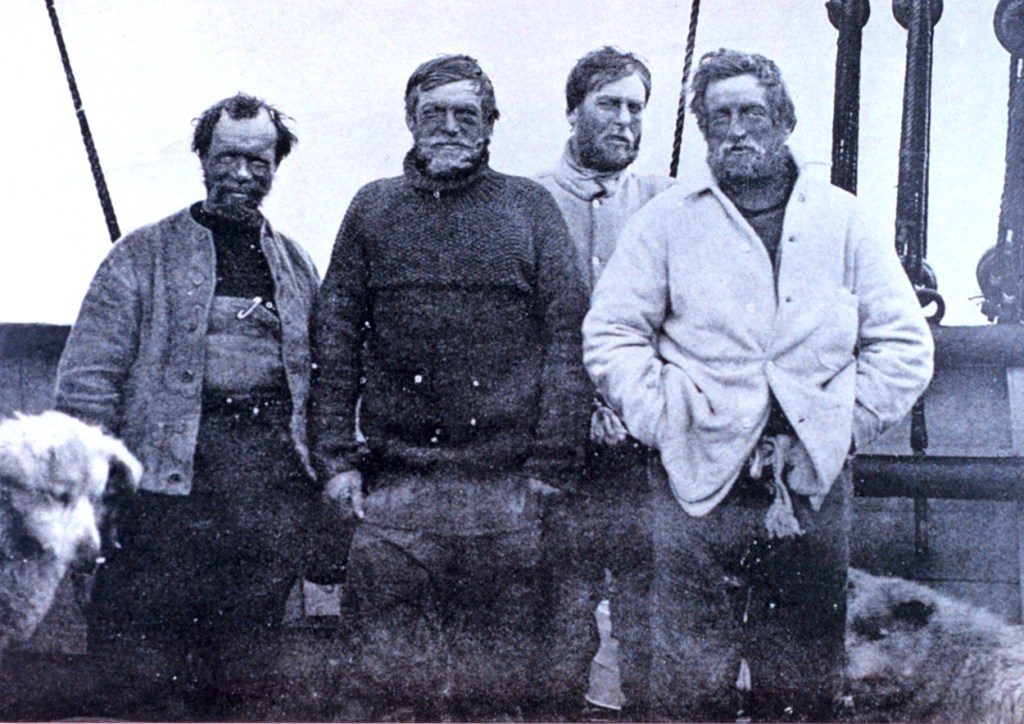
Ernest Shackleton was an Anglo-Irish Antarctic explorer who led three British expeditions to the Antarctic. Prof. Nancy Koehn discusses the series of events and leadership lessons to be learnt from this expedition.
The discussion is about his expedition where in January 1915 they could see the Antarctic Coast about 80 miles away. Ice formed around the ship and locked together like a vice eventually destroying the ship. Shackleton, and 28 inhabitants on the ship, Endurance, was absolutely stuck in the most testing conditions.

When recruiting men for the expedition the advert said, ”men wanted: for hazardous journey. small wages, bitter cold, long months of complete darkness, constant danger, safe return doubtful. honour and recognition in case of success.” So these men may have thought they were aware of the dangers but in reality they needed the right leader to get them through.
What did Shackleton do to keep the spirits of his crew as high as possible despite the dire situation they were in?
Move between daily operational roles and strategy and leadership
Shackleton also needed to perform a lot of duties during the day, but he ensured that he placed the right level of focus on leading the team and looking at the strategy. At that point he needed to make decisions that not only impacted the mission, but now also the lives of the team. The strategy needed to change as conditions became worse.
How often do leaders become involved in the daily operations of the organisation so much that they lose sight of what they need to be doing; defining-, implementing-, re-evaluating- and taking corrective steps about the strategy. If the conditions have changed the strategy may no longer be valid. While it is important for a leader to roll up their sleeves and work with the team, from time to time they must take a step back, look ap and see what is ahead to steer the ship. Shackleton was able to move between operations and strategy and leadership as needed.
He took responsibility for the position he put the team in
It is very important to note that he took responsibility for the position that the team was in. Shifting the blame and finding excuses would have led the team to lose respect and even question his leadership ability.
Leaders today must take responsibility for their actions and the performance of their teams. When the plan fails it’s the leader’s plan, regardless of who came up the plan. If someone else in the team proposes a plan and it’s accepted, it becomes the team’s plan for which the leader is responsible for actioning and being successful.
There is a concept, the window and the mirror that speaks about this issue in leadership. When everything is going well the leader tends to look in the mirror, ‘I did it’. And when it goes wrong, they look through the window to ‘all the other people that made it fail’. A leader will share the success but take responsibility for the blame.
He had the discipline to move forward
In trying times, it is easy to get stuck where you are and often procrastinate on taking decisions. It is important to take a decision, even if later it turns out to be the wrong one, often doing nothing or not making a decision is worse.
He knew that his leadership needed to evolve with the changes they faced.
Shackleton took time to ‘meet with himself’ to evaluate his situation and see what changes needed to be made. There was a level of introspection that we don’t often see, especially when times are tough. Planning seems to take too much time and doing feels to be more productive. We forget that doing the wrong things are not only not productive but might be wasteful to the point that it is detrimental to the success of the mission.
Creating mental medicine
Lastly and probably the most importantly, Shackleton ensured that he kept spirits high by what he referred to as creating mental medicine. He ensured that the men kept busy and engaged, not sitting in their rooms alone thinking about the situation. He did this by having all the men together socialising every night for an hour. He also did this by putting together activities for the men such as having a waltzing competition and dog races on the ice. He knew the importance of this so much so that when they needed to leave the ship with as little as possible, he insisted they save a banjo for its value in lifting the team’s spirits. By doing this he ensured that he kept the right mindset for his team. Any leader needs to take care of his team’s mental well-being, are they engaged and positive, and if not, it can cause a downward spiral and pull everyone else into it!
After the ship sunk into the ice, he also evaluated the men’s mental well-being and identified the men that had low spirits and would complain to the point if infecting the rest of the men with their poor state of mind and negativity. To stop the spread of negativity and limit the disruptors’ ability to do just that, disrupt the rest of the team, he brough those men closer to him by staying in his tent. He would then periodically check the mental state of the other men and rotate to ensure the best spirits are kept in the camp.
Do we as leaders do the same in our working environments and our teams? Do we have the time or mental capacity to bring the people that are on a mental low closer to us so that we can raise them up? Often, we don’t. we are too busy in our own operations and we feel that they will bring us down so what we do is move them further away from us. Quite the opposite of what we should be doing. When our team members are struggling, they need more attention and focus to get them through it. It also gives a leader an opportunity to build a bond on an individual level with each person.
Final words
There is so much to learn from Shackleton and this expedition that can be implemented in our daily lives as leaders. Caring for the team must be every leader’s top priority. Having a happy and engaged team will ensure that they treat each other better, exert more discretionary effort and be more productive, come up with ideas and would want to collaborate and add value, and ultimately this will translate to treating customers better that will lead to better company performance.
As leaders we need to work on ourselves first, meet with ourselves, identify our own challenges, inabilities and what we need to work on and change, and know what we are leading towards. Be comfortable that the plan may need to change. Even large companies are worried about their position in the market with the levels of disruption we are seeing today. The only way to stay afloat is to navigate the waters day by day and make course corrections as and when needed. Following the methods learnt from Shackleton will ensure your team stays the course with you.
Photo by Annie Spratt, Owen Beard on Unsplash on Unsplash, Mark Goldenson on Venturekit
 shaune bouwer talks everything value