
I recently went to a popular restaurant chain drive through and placed an order for breakfast on my way to work. It’s a quick stop on my way to work so if I am running late or just want a day off from making breakfast it’s the convenient thing to do.
So I am in the queue behind two other cars but it doesn’t take long and I get to the window to place my order. I make the payment and proceed to the window to collect my food. It’s a simple standard breakfast order and a coffee so it should just take a few moments but that’s not what happens.
After a while of waiting I am asked to drive to one of the parking spots at the end of the drive through and wait for my order. That is exactly what I didn’t want to do when I decided to go to the drive through. I ended up waiting almost 20 minutes for my basic order.
What can possibly go wrong in a fast food takeaway eatery for a simple order to take that long? This is a standard order from a limited breakfast menu from a company that has the resources to do better planning for one of its target meal times. But here’s the kicker. This was not a once off experience due to some technical error. I was directed to one of three dedicated numbered parking spots with official signs where people must wait for their drive through orders that take too long so that it doesn’t back up the rest of the cars in the queue.
So consider this, their performance is so consistently poor it was easier to accept their fate and create a poor performance backup than correct the errors in this simple supply chain challenge.
I would like to point out that I have not had this experience in their other franchise restaurants (although I have not looked to see if they have a dedicated poor performance parking space). After this happened the second time I never went back to that particular restaurant.
It’s a simple problem that does not have a simple solution as ensuring that the company effectively applies the solution means that employees are aligned to the vision and mission and are empowered to act. If those empowered employees do not act the company needs strong leadership to drive the correct behavior. After all, the leadership is ultimately accountable!
Sure, it has to do with the company’s vision, mission, but and ultimately the culture that enables or discourages not aligning to the goals set by senior leadership. If you look at the vision for many of these quick service restaurants (QSRs) they usually include quality, enjoyment and a customer-centric focus. Are these mission statements just nice to have or something that the marketing department said looks good on the website? I would like to believe that the senior leaders believe in the mission and vision and would expect the same from every single employee.

The bottom line is that not setting and having a goal not only leads to under-performing, it leads to high levels of mediocrity in an ever more competitive environment. As a result strategies, especially new strategies are not strategies at all and don’t have anything worth executing. They are slogans that fade more and more as they move down the company hierarchy. These strategies don’t have a goal, a desired end point and timeline, and a clear set of choices.
Let’s assume this QSR has the standard visions of customer-centricity. I use customer-centricity as for me this encompasses everything the business needs to accomplish. This means they would never allow a client to sit at wait for 20 minutes in a parking after ordering from a drive through. The simple approach is to set the resolution criteria for that problem: A goal for the drive through section itself. (1) Serve quality food (2) accurately so that each order is correct and to (3) to deliver by the time the patron gets to the last window.
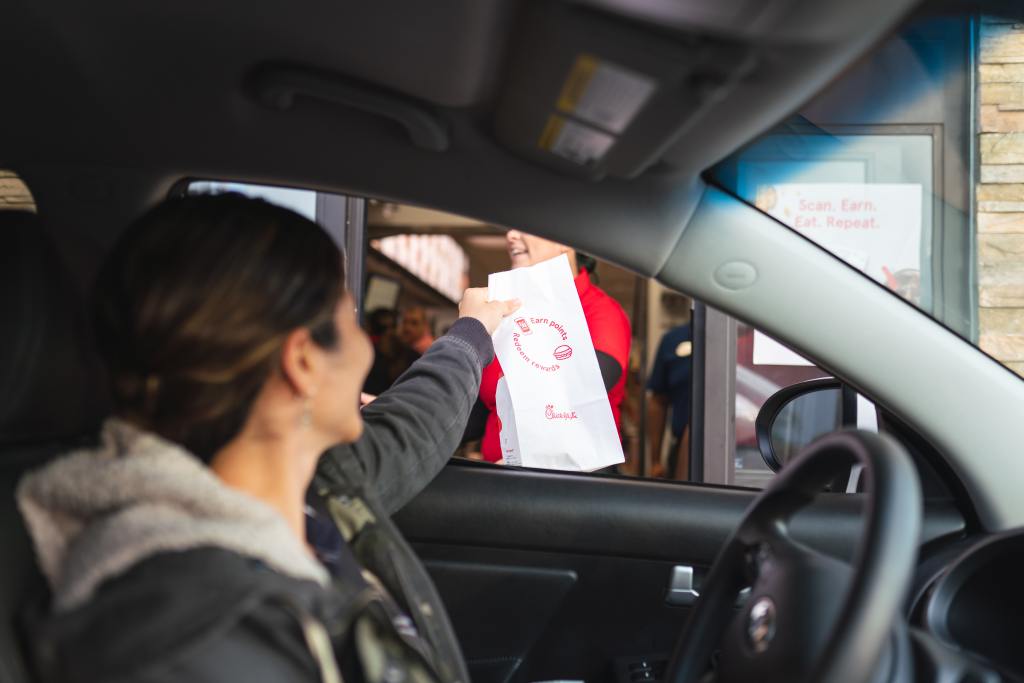
Setting these simple goals provide a guide to what the manager and employees need to accomplish. That means food is always available (forecasting), the equipment always works (routine maintenance) and everyone knows that they need to do and by when (training). These can continuously be broken down into other levels to ensure the foundation allows everyone to reach the goals that aligns to the mission and vision.
Elon Musk said “If you give yourself 30 days to clean your home, it will take you 30 days. But if you give yourself 3 hours, it will take 3 hours. The same applies to your goals, ambitions, and potential.” It’s really that simple.
I would highly recommend to everyone to read The Goal by Eliyahu M. Goldratt. It’s a simple read that highlights how obvious the road to achieving goals can be, you just need to look at it a bit differently.
Image credits: Photo by ÁLVARO MENDOZA, Jeremy Bishop, Photo by David Iskander on Unsplash
 shaune bouwer talks everything value